
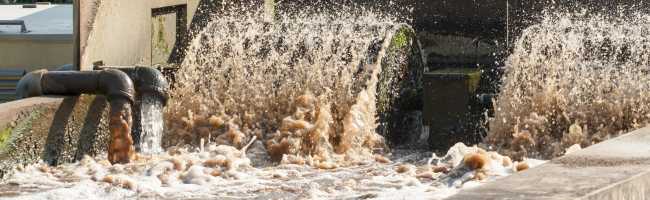
Mining operations are essential for meeting the world’s resource needs, yet they do generate wastewater containing contaminants that can be harmful to the environment if not handled properly. Addressing this issue requires implementing efficient wastewater treatment methods tailored to the specific characteristics of mining facilities. In this article, we’ll explore the fundamentals of Wastewater Treatment in the Mining Industry, including various filtration media technologies, treatment processes, and the importance of customized solutions.
Understanding Mining Wastewater: Mining wastewater typically contains a complex mixture of suspended solids, heavy metals, and other contaminants, posing significant environmental risks if discharged untreated. These contaminants can originate from various mining activities, including ore processing, leaching, and runoff from exposed mine sites.
Importance of Effective Filtration: Various filtration media technologies play a crucial role in removing contaminants from mining wastewater. Among these, filtration methods such as multimedia filtration, activated carbon filtration, and membrane filtration are commonly employed for their effectiveness in targeting specific pollutants.
The Crucial Role of Filtration in Treatment: Filtration serves as the cornerstone of mining wastewater treatment, acting as the primary mechanism for removing solid particles and pollutants from wastewater streams.
Several advanced filtration methods are employed, each offering unique capabilities suited to different types of contaminants:
Types of Filtrations:
Activated Carbon Filtration:
Renowned for its exceptional adsorption properties, activated carbon efficiently removes organic compounds and heavy metals from wastewater, ensuring superior water quality.
Sand Filtration:
Traditional yet effective, sand filtration harnesses the natural filtration capabilities of sand layers to trap sediment and coarse particles, providing a foundational step in wastewater purification.
Membrane Filtration Technologies: Leveraging semi-permeable membranes, such as ultrafiltration and reverse osmosis, membrane filtration techniques excel in separating dissolved solids, bacteria, and viruses from water, yielding high purity treated water.
Tailings Management in Mineral Processing
Enhancing Cyanide Destruction: The multifaceted challenge of cyanide destruction in mineral processing extends to tailings management, necessitating adept handling of agitation dynamics. Blending, solid suspension, and gas dispersion must be finely tuned to ensure comprehensive cyanide elimination before slurry discharge into tailings ponds. With a wealth of experience spanning numerous successful installations, we excel in tailoring mixer sizes to match your specific requirements, ensuring efficient cyanide destruction and responsible tailings management practices.
High-Density Sludge Mixer Process: Efficient treatment of acid mine water and proper disposal of sludge are paramount for water recovery and compliance with environmental regulations in mining operations. The integration of advanced impeller technology into proven mixers plays a crucial role in facilitating lime incorporation and gas dispersion for acid neutralization and heavy metal precipitation. This innovative approach not only ensures environmental integrity but also supports responsible tailings pond management practices.
Dynamix has a proven track record in supplying mixers tailored to these demanding applications, integrating innovative solutions for tailings management. This comprehensive approach not only ensures effective cyanide destruction but also supports responsible tailings management practices, safeguarding environmental integrity.
Dynamix Wastewater Treatment Mixers for Mining Industry
Dynamix offers tailored solutions for wastewater treatment through our industrial mixers, recognizing the intricate nature of the processes involved. We emphasize the critical
interdependency of each stage in the wastewater treatment process and the importance of precise mixing control throughout. Our expertise lies in designing mixers specifically for the needs of wastewater treatment, considering factors such as rapid flash mixing, polymer addition, and handling lime slurries. We understand the significance of controlled mixing in processes like Moving Bed Bio-Reactor (MBBR) and aerobic/anaerobic processes and advocate for the use of top-entry mixers for energy efficiency and effectiveness compared to other methods like submersible mixers or air mixers.
Our approach involves understanding the client’s specific water and wastewater treatment requirements and configuring high-pumping, high-torque industrial mixers accordingly. We
stress on the importance of proper industrial mixer design in achieving efficient mixing, which can lead to substantial savings compared to more common methods like air flotation or submersible mixers.
Overall, Dynamix offers a comprehensive solution by combining our expertise in mixer design with a focus on meeting the unique needs of each wastewater treatment process. Request A Quote Today.
Environmental & Economic Benefits of Effective Wastewater Treatment in Mining
Investing in robust wastewater treatment not only safeguards the environment but also delivers substantial economic benefits for mining companies. Compliance with regulatory standards mitigates the risk of costly fines, while reclaimed water from treatment processes can be repurposed within mining operations, reducing reliance on freshwater sources, and enhancing resource efficiency.
Advancing Towards Sustainability Through Filtration
Mining wastewater treatment stands at the nexus of environmental responsibility and operational excellence. By embracing advanced filtration technologies and tailored wastewater treatment solutions, the mining industry can mitigate its environmental footprint while unlocking significant economic value. Prioritizing sustainable water management practices fosters a harmonious relationship between resource extraction and environmental preservation, paving the way for a brighter, more sustainable future.
For mining companies seeking to enhance their wastewater treatment practices, investing in cutting-edge filtration technologies and tailored solutions is essential. By prioritizing sustainability and embracing innovation, the mining industry can lead the way towards a future where responsible resource extraction and sustainability go hand in hand.
FAQs
- Why is wastewater treatment important in the mining industry?
Mining wastewater can contain suspended solids, heavy metals, and other contaminants generated by activities such as ore processing, leaching, and runoff. Effective treatment helps reduce environmental risks, support regulatory compliance, and enable water recovery for reuse within mining operations.
- What contaminants are commonly found in mining wastewater?
Mining wastewater can contain suspended solids, heavy metals, and other pollutants. The specific contaminants depend on the mining process and may originate from ore processing, leaching operations, and exposed mine-site runoff.
- What filtration methods are used to treat mining wastewater?
Common filtration technologies include sand filtration, activated carbon filtration, and membrane filtration. Each technology is suited to different contaminants and treatment objectives.
- How does activated carbon filtration treat mining wastewater?
Activated carbon uses adsorption to remove certain organic compounds and contaminants, including some heavy metals. It can be incorporated into treatment systems where these contaminants need to be reduced.
- What is sand filtration in mining wastewater treatment?
Sand filtration uses layers of sand to capture sediment and relatively coarse suspended particles. It can provide a foundational filtration step before additional treatment technologies are applied.
- What is membrane filtration?
Membrane filtration uses semi-permeable membranes to separate contaminants from water. Technologies such as ultrafiltration and reverse osmosis can be used to remove dissolved solids and microorganisms and produce higher-purity treated water.
- What role does mixing play in mining wastewater treatment?
Mixing helps control important treatment processes such as chemical addition, solids suspension, gas dispersion, and slurry blending. Proper mixing can help maintain the conditions required for effective treatment throughout different stages of a mining wastewater system.
- Why are agitators important for tailings management?
Agitators can support tailings treatment by providing controlled blending, solids suspension, and gas dispersion. These mixing functions are particularly important in processes such as cyanide destruction and acid mine water treatment.
- How are mixers used in cyanide destruction?
Cyanide destruction requires controlled agitation to support blending, solids suspension, and gas dispersion. Properly designed mixers help create the mixing conditions needed for treatment before slurry is discharged to tailings facilities.
- What is high-density sludge treatment in mining?
High-density sludge treatment can be used to treat acid mine water and facilitate sludge management. Mixing equipment can help incorporate lime and provide gas dispersion during acid neutralization and heavy-metal precipitation.
- How are mixers used to treat acid mine water?
Mixers can promote the incorporation of lime into acid mine water and provide the agitation needed for chemical treatment. This supports acid neutralization and the precipitation of heavy metals from the water.
- Why is lime mixing important in mining wastewater treatment?
Lime is used in treatment processes such as acid neutralization and heavy-metal precipitation. Effective mixing helps distribute lime slurry throughout the treatment volume and promotes contact between the treatment chemical and wastewater.
- What mixing processes are used in mining wastewater treatment plants?
Depending on the treatment system, mixers may be used for rapid flash mixing, polymer addition, lime slurry handling, solids suspension, gas dispersion, MBBR processes, and aerobic or anaerobic treatment.
- What should be considered when selecting an industrial mixer for mining wastewater?
Mixer selection should account for the wastewater characteristics, tank geometry, solids concentration, chemical additions, required pumping capacity, torque requirements, and the specific treatment process. Dynamix describes configuring high-pumping, high-torque industrial mixers around the individual requirements of the application.
- How can effective wastewater treatment help mining companies conserve water?
Treated wastewater can potentially be reclaimed and reused within mining operations. This can reduce dependence on freshwater sources while improving overall resource efficiency.
- What are the economic benefits of treating mining wastewater?
Effective wastewater treatment can help mining companies meet environmental requirements and reduce the risk of regulatory penalties. Reusing treated water can also reduce reliance on freshwater, contributing to improved resource efficiency.
- Why are customized wastewater treatment solutions important for mining operations?
Mining wastewater varies significantly depending on the ore, processing methods, contaminants, and site conditions. Customized treatment and mixing solutions can be designed around the specific characteristics of the wastewater and the requirements of each treatment stage.
- How do industrial mixers support sustainable mining practices?
Industrial mixers can support processes that enable wastewater treatment, contaminant removal, water recovery, and responsible tailings management. Effective treatment can reduce environmental impacts while allowing treated water to be reused within mining operations.


