Smart Mixer Design: Flexibility and Reducing Product Residue 

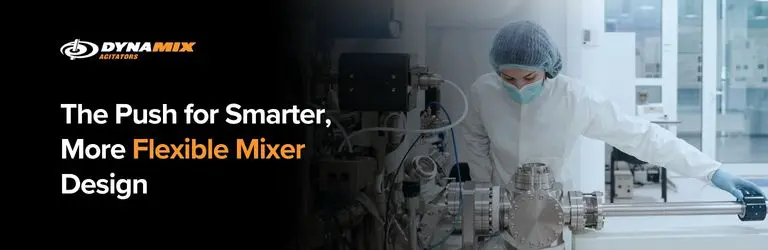
The Push for Smarter, More Flexible Mixer Design 

In today’s fast-paced manufacturing landscape, the demands on industrial mixers are evolving. Manufacturers seek equipment that not only performs efficiently but also adapts to changing products, minimizes waste, and reduces downtime. Smart mixer design, focused on flexibility and reducing product residue, is becoming a top priority across industries. 

From batch-to-batch cleaning challenges to the costs of leftover materials in tanks, improving flexibility and minimizing residue are no longer optional. They are essential for operational efficiency, product integrity, and sustainable manufacturing. 

Why Product Residue Is a Major Concern 

Product residue in mixing systems can lead to: 

  • Cross-contamination in multi-product facilities 
  • Reduced yield and higher raw material costs 
  • Extended cleaning cycles and production downtime 
  • Compromised product quality in high-purity applications 

Residue is often caused by poor mixer-to-tank integration, dead zones in tank geometry, and inefficient impeller placement. Redesigning with waste minimization in mind has become a strategic goal for leading producers. 

Learn more about dead zones and interrogating mixing performance at Envirotec. 

Designing for Flexibility: Why Modular Mixer Systems Are In Demand 

A flexible mixing system can adapt to varying batch sizes, fluid properties, and product types without requiring extensive reconfiguration. 

Modular design principles support: 

  • Interchangeable Impellers: Adaptable for different shear requirements 
  • Adjustable Shaft Lengths: Allow use with varying tank depths 
  • Mounting Versatility: Top-entry, side-entry, or portable clamp mounts 
  • Control System Integration: PLC/VFD compatibility for process variation.

How Dynamix Delivers Smarter Mixer Design 

At Dynamix Agitators, smart mixer design begins with understanding customer needs. Whether the goal is batch repeatability, fast changeover, or minimizing waste, Dynamix engineers consider the full mixing environment.  

Key offerings include: 

  • Custom impeller geometries 
  • Tank-matching shaft and impeller positioning 
  • Sanitary designs with polished finishes 
  • Modular systems for scale-up or batch flexibility 

Dynamix’s approach builds long-term customer loyalty by solving problems others overlook.

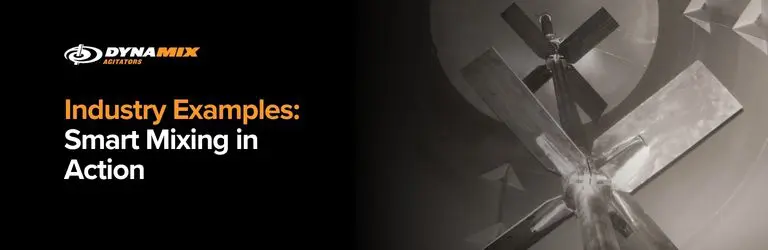
Industry Examples: Smart Mixing in Action 

  • Food & Beverage: Sauce and syrup producers need fast cleanup between flavors. Smart design includes flush impellers and CIP-ready systems. 
  • Cosmetics: Viscous creams often leave thick residue. High torque mixers improve uniformity increasing yield and cleanability. 
  • Adhesives & Chemicals: Residue leads to product loss and clogging. Using anti-stick materials and tapered tank bottoms helps resolve this. 

Smart Controls and Automation for Cleaner Operations 

Advanced mixer designs now feature smart automation tools to further reduce residue and improve process control: 

  • Torque Sensing: Detect mixing resistance to optimize mixing time 
  • VFD Integration: Adjust speed profiles dynamically for batch needs 
  • SCADA Connectivity: Enables data-driven adjustments and remote monitoring 

ISA Automation Events offer the latest insights on intelligent mixer controls.

Design Tips for Reducing Mixer Residue 

  • Try to slope tank bottoms and minimize internal obstructions 
  • Select impellers with self-cleaning or swept-back profiles 
  • Use high-grade surface finishes (e.g., Ra < 0.8 µm for hygienic systems) 
  • Integrate CIP nozzles positioned for complete tank coverage 

The Economics of Clean Mixing 

Reducing product residue offers tangible financial benefits: 

  • Increased Yield: Capture more usable product from each batch 
  • Faster Changeovers: Cut cleaning time, boosting production hours 
  • Reduced Cleaning Costs: Lower water, solvent, and labor requirements 
  • Improved Regulatory Compliance: Easier validation in GMP environments 

Conclusion: Efficiency Starts with Smart Design 

In today’s competitive manufacturing climate, flexibility and efficiency are essential. Smart mixer design focuses not just on power and flow, but on minimizing waste, enhancing adaptability, and integrating clean operation features. 

With the right engineering partner, such as Dynamix Agitators, manufacturers can implement mixing systems that are both high-performing and responsive to evolving product and production needs. 

FAQ's

  • A: Using optimized tank geometry, flush impellers, and polished surfaces prevents material buildup and simplifies cleaning.

  • A: A modular system allows for interchangeable impellers, adjustable shafts, and flexible mounting options to handle multiple batch types. 

  • A: Yes. Designs that reduce residue and improve drainage recover more usable product from each batch. 

  • A: Food, pharmaceuticals, cosmetics, and specialty chemicals require quick changeovers and cleanability. 

  • A: Product residue can lead to cross-contamination, higher material waste, longer cleaning times, and reduced batch yield—especially in multi-product or hygienic manufacturing environments. 

  • A: Factors such as impeller geometry, tank shape, surface finish, and entry location all affect how well materials are moved and cleared from the tank during and after mixing. 

  • A: Bottom-entry mixers, flush-profile impellers, sloped tank bottoms, polished finishes, and Clean-in-Place (CIP) compatibility all contribute to cleaner mixing processes.

  • A: Food & beverage, pharmaceuticals, cosmetics, and chemical production—all industries where product purity, changeovers, and yield are critical—benefit significantly from residue-minimizing design.

  • A: A modular mixer system allows interchangeable impellers, adjustable shaft lengths, and multiple mounting configurations to adapt to different products or batch sizes without full redesign.

  • A: Smart systems like load cells, torque sensors, and SCADA-connected VFDs allow for real-time adjustments, optimized cycle times, and early detection of process inefficiencies.

  • A: Yes. Integrating mixers with PLCs or SCADA systems allows operators to adjust speed, timing, and torque based on batch conditions—ideal for flexible production lines. 

  • A: Conical or sloped tank bottoms enhance drainage, while reducing dead zones. This improves product recovery and minimizes cleaning time.

  • A: Dynamix focuses on customized, tank-matched solutions with modular flexibility, cleanable surfaces, and application-driven engineering—reducing waste while boosting performance.

Other Recent In The Mix Articles:

Search :

SELECT THE BLOG CATEGORY BELOW

WHAT OUR CUSTOMERS ARE SAYING

Keep up with what's new at Dynamix

Subscribe to our newsletter for helpful technical publications and industry announcements.