mixing matters blog

Industrial Mixing topics from your mixing experts

Mixing matters blog - Covering any topic involving industrial mixers and utility mixers

uses of inline mixers
Industrial Mixing

Uses of Inline Mixers

Inline mixers are used wherever a continuous process stream needs fast, controlled blending directly in the pipeline. Instead of transferring material to a separate batch tank, mixing can occur while the fluid is already moving through the process.  This makes inline mixing especially valuable for plants that want to eliminate a dedicated mixing tank, reduce equipment footprint, simplify process layouts, or maintain flexibility as operating flow rates change.  A dynamic inline mixer uses a powered impeller installed within a pipeline mixing chamber. Unlike a static mixer, which depends on the energy of the flowing fluid, a dynamic mixer introduces its own mixing energy. The mixer can therefore be configured to provide controlled mixing across a defined operating flow range.  That capability creates a wide

Read More »
shear-vs-mixing-blog
Industrial Mixing

Shear vs. Mixing Performance: Why Flow and Impeller Sizing Matter?

A mixer can run at high speed, carry a large motor, create a visible vortex, and still leave a process under-mixed.  That apparent contradiction is common in industrial mixing sizing. A small impeller operating at high RPM may create intense local motion near the blades, but it may not move enough total liquid to suspend solids, eliminate concentration gradients, equalize temperature, or achieve the required blend time throughout the vessel.  The problem is not that shear is unimportant. Shear is present in every mixer design and is essential in many processes. The problem is treating shear, RPM, or installed horsepower as substitutes for mixing performance.  Standardized mixers are risky. They are appropriate when the process duty falls within the conditions

Read More »
smart-desing-industrial-mixer
Industrial Mixing

Smart Mixer Design: Flexibility and Reducing Product Residue 

The Push for Smarter, More Flexible Mixer Design  In today’s fast-paced manufacturing landscape, the demands on industrial mixers are evolving. Manufacturers seek equipment that not only performs efficiently but also adapts to changing products, minimizes waste, and reduces downtime. Smart mixer design, focused on flexibility and reducing product residue, is becoming a top priority across industries.  From batch-to-batch cleaning challenges to the costs of leftover materials in tanks, improving flexibility and minimizing residue are no longer optional. They are essential for operational efficiency, product integrity, and sustainable manufacturing.  Why Product Residue Is a Major Concern  Product residue in mixing systems can lead to:  Cross-contamination in multi-product facilities  Reduced yield and higher raw material costs  Extended cleaning cycles and production downtime  Compromised product

Read More »
top-use-tote-mixers-industrial
Industrial Mixing

Top Use Cases for Tote Agitators in Process Industries

Dynamix knows mixing is a critical quality and process control tool.  We offer our design and configuration approach throughout our mixing line, and Tote Mixing is one of the most valuable. While process engineers focus on mixing in process, additives must be properly controlled as well. What is the point of perfecting your process if you are to add product that is not in spec? That is where our ITM Tote Mixers and Application engineers come in.   Tote agitators offer a powerful mixing solution when materials arrive in Intermediate Bulk Containers (IBCs / totes). By allowing blending, homogenization, and suspension directly in the container, they reduce handling steps and preserve product quality. In this post, we’ll explore the main applications of tote agitators across industries, challenges to anticipate, and

Read More »
industrial-mixing-classification
Industrial Mixing

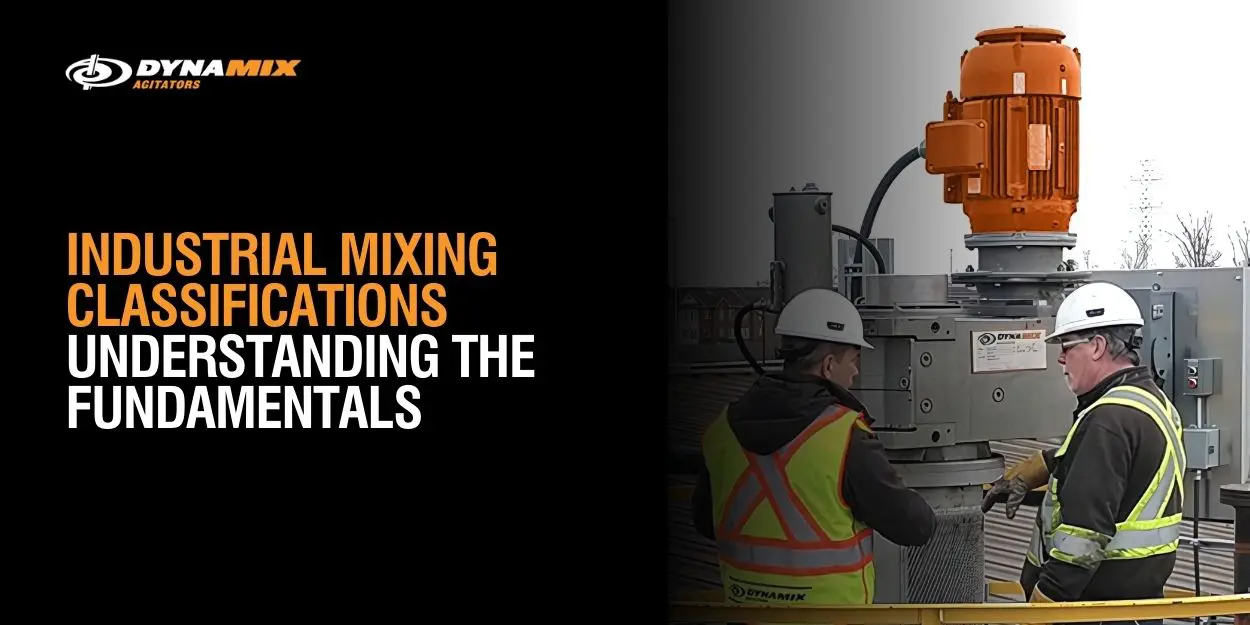
Industrial Mixing Classifications: Understanding the Fundamentals

Industrial mixing is at the heart of food, chemical, pharmaceutical, and specialty manufacturing. Choosing the right mixing classification is critical, as each process depends on how ingredients interact whether they dissolve, suspend, or emulsify.  Broadly, mixing falls into three primary classifications: liquid-liquid mixing, liquid-solid mixing, and gas-liquid mixing. Below, we break down each category, their subtypes, and their industrial applications. 1. Liquid-Liquid Mixing  This classification involves combining two or more liquid ingredients.  Miscible Mixing: When liquids are miscible, they mix completely into a single, homogeneous solution. Example applications:  Flavored beverages (water and syrup)  Pharmaceutical solutions Chemical solvent blending  Immiscible Mixing: Immiscible liquids (like oil and water) do not naturally form a uniform mixture. Specialized equipment such as high-shear mixers is often required to disperse one liquid into another. Example applications:  Emulsions

Read More »
how_baffle_arrangement_improves_industrial_mixing
Industrial Mixing

How Baffle Arrangement Improves Industrial Mixing 

Do I need baffles in my Mixing Tank?  Yes!  While a mixer is at the heart of your mixing process, the tank design can make or break the process.  One of the most common overlooked elements of mixer tank design is Baffle Design.  Even with a properly sized mixer, fluids often swirl with no turbulence. This is not mixing.  This leads to dead zones, poor suspension, and inconsistent product quality – no mixing control.   The solution is simple but powerful: baffles. By disrupting circular flow, baffles improve agitation by creating turbulence, and enhancing axial flow. This offers great benefits in solids suspension, blending, time to uniformity and energy efficiency. What Are Baffles?  Baffles are typically flat plates installed along the

Read More »

Search :

SELECT THE BLOG CATEGORY BELOW

WHAT OUR CUSTOMERS ARE SAYING

Keep up with what's new at Dynamix

Subscribe to our newsletter for helpful technical publications and industry announcements.