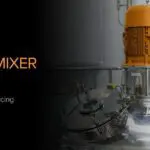
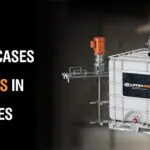
Dynamix knows mixing is a critical quality and process control tool. We offer our design and configuration approach throughout our mixing line, and Tote Mixing is one of the most valuable. While process engineers focus on mixing in process, additives must be properly controlled as well. What is the point of perfecting your process if you are to add product that is not in spec? That is where our ITM Tote Mixers and Application engineers come in.
Tote agitators offer a powerful mixing solution when materials arrive in Intermediate Bulk Containers (IBCs / totes). By allowing blending, homogenization, and suspension directly in the container, they reduce handling steps and preserve product quality. In this post, we’ll explore the main applications of tote agitators across industries, challenges to anticipate, and best practices for integrating them into your process.
Why Choose a Dynamix Tote Agitator?
Tote agitators (also known as IBC agitators) are designed to be mounted onto or into a tote to stir its contents. Their advantages include:
Reduced material transfers — you don’t need to pour or pump from one vessel to another
Improved mix consistency — helps prevent settling, stratification, or segregation
Flexible design options — customizable impellers, speeds, and shaft lengths
Plugandplay deployment — quick installation, minimal process disruption
Because of those benefits, tote agitators are a popular choice in chemical, coatings, food, pharmaceutical, and specialty processing sectors.
Tote Mixers: Core Industries & Applications
Chemical & Coatings
In chemical processing, maintaining uniform dispersion of reactants, solvents, and additives is essential. A tote agitator supports blending, dilution, and stabilization tasks without requiring transfer to a separate vessel.
In coatings and paint manufacturing, tote agitators help distribute pigments, binders, and rheology modifiers evenly, all while in the IBC. That ensures consistent color, viscosity, and performance in the final product.
Our Patented ITM Coupling allows for the agitator segment to reside in the tank while the drive is shared or removed. This ensures product can be enclosed with the tote, and mixed properly to uniformity and spec at the End Users facility.
Food, Beverage & Nutraceuticals
For food and nutraceutical applications, prevention of contamination and gentle mixing are priorities. Tote agitators support suspension of powders, stabilization of emulsions (oil/water blends), and prevention of phase separation. Because the mixing takes place in the same container, you reduce the number of contact points and cleaning cycles.
Our Patented ITM Coupling allows for the agitator segment to reside in the tank while the drive is shared or removed. This ensures product can be enclosed with the tote, and mixed properly to uniformity and spec at the End Users facility.
Pharmaceuticals & Bioprocessing
When blending APIs (active pharmaceutical ingredients), buffers, and excipients, tote agitators provide a contained environment for precise mixing. They reduce cross–contamination risk and improve throughput by starting mixing immediately upon feed into the tote. Our Application Engineers know of many ways to address and manage shear related to this product quality.
Our Patented ITM Coupling allows for the agitator segment to reside in the tank while the drive is shared or removed. This ensures product can be enclosed with the tote, and moved and mixed without exposing the product to the environment.
Specialty & Industrial Materials
In processes involving adhesives, resins, fillers, or specialty chemical blends, tote agitators keep solid particles in suspension and deliver more consistent feed to downstream equipment (e.g. pumps, extruders, coating lines).
Efficiency & Waste Reduction Benefits
Tote agitators contribute meaningfully to operational efficiency and resource savings:
- Consistent product quality — you avoid rework from settling or phase separation
- Lower material loss — material stays in the tote; less leftover or transfer waste
- Reduced downtime — fewer transfers and cleanings speed up cycles
- Simplified workflows — fewer containers, less manual handling, easier automation
Common Challenges & Mitigation Strategies
Dead Zones (Poor Mixing Zones)
Even with agitation, some regions may not experience adequate fluid motion. Use multiple impellers on different levels or install baffles and flow directors to reduce stagnant zones.
High Viscosity or Shear Sensitive Inputs
Viscous slurries or shear sensitive ingredients demand appropriate low shear impellers like our P3B, or Dynaflow impellers. Start at low speed and ramp up gradually to protect rheology. Ensure seals and mounts can handle torque loads.
Best Practices for Implementation
Work with engineers to size the agitator based on your worst case viscosity or solids loading Use variable speed drives for fine control. Add instrumentation (torque, temperature, sensors) to monitor mixing behavior. Train operators in proper mounting, sealing, cleaning, and maintenance. Keep spare impellers and service parts on hand.
Final Thoughts
Do not underestimate the value of the inputs to your process. Mixing properly in a tote is an input to ensure your process stays in spec.
Rely on our application engineers to design and configure for your tote products.
Know that the ITM is highly configurable, so that you can get the mixing you need.
Tote agitators offer a streamlined, flexible, and efficient means of blending directly in IBCs. When properly engineered to address challenges like dead zones, viscosity, and wear, they can deliver consistency, waste reduction, and throughput improvements.
If you’re assessing whether a tote agitator is right for your process or want to refine a configuration, reach out to Dynamix. We’re ready to help you select the optimal mixing solution that fits your workflow, formulation, and scale.
FAQ's
- Q: What is a tote agitator, and how does it work?
A: tote agitator (or IBC agitator) is a mixing device designed to mount directly onto an Intermediate Bulk Container (IBC). It stirs or blends materials inside the tote, ensuring consistent composition by preventing settling, stratification, or separation. It allows for on-site mixing without transferring materials between tanks.
- Q: What industries commonly use tote agitators?
A: Tote agitators are widely used in the chemical, coatings, food and beverage, nutraceutical, pharmaceutical, and specialty manufacturing industries. Each sector benefits from their ability to maintain uniform mixtures directly within transport or storage containers.
- Q: What are the main benefits of using a tote agitator?
A: Tote agitators offer:
- Fewer material transfers
- Improved mix consistency
- Reduced waste and product loss
- Faster changeovers and less downtime
- Streamlined workflows through automation compatibility.
- Q: How do tote agitators improve efficiency and reduce waste?
A: By allowing blending, homogenization, and suspension to occur directly in the tote, tote agitators reduce the need for transfer to separate tanks. This minimizes product loss, contamination risk, and cleanup time—resulting in greater process efficiency and lower waste.
- Q: What challenges can occur when using tote agitators?
A: Common challenges include:
- Dead zones (areas with poor fluid movement)
- High-viscosity materials requiring more torque
- Impeller wear and drift over time
These issues can be mitigated with the correct impeller design, baffle placement, and regular maintenance.
- ShapeQ: How can dead zones be minimized in tote mixing?
A: To eliminate unmixed areas, use multiple impellers positioned at different heights or install flow directors and baffles. These promote uniform circulation throughout the tote and ensure consistent product quality.
- Q: What types of materials are best mixed with tote agitators?
A: Tote agitators can handle a variety of materials, including:
- Liquids and semi-viscous fluids
- Suspensions with solids or powders
- Emulsions such as oil-water blends
They are ideal for processes involving adhesives, coatings, resins, or food emulsions.
- Q: What design considerations should be made when selecting a tote agitator?
A: Key factors include viscosity range, container geometry, impeller type, and motor speed control. Variable-speed drives (VFDs) allow fine-tuning for different products, while selecting the proper impeller type (helical, anchor, or pitched-blade) ensures optimal performance.
- Q: How do tote agitators enhance product consistency in chemical and coatings industries?
A: In chemical and coatings applications, tote agitators ensure even distribution of pigments, resins, binders, and additives. This results in consistent viscosity, color, and chemical stability, minimizing product variability and rework.
- Q: What best practices help maintain tote agitator performance?
A: To maximize longevity and reliability:
- Inspect impellers and seals regularly
- Keep spare parts on hand
- Train operators on proper mounting and cleaning
- Use instrumentation (torque or temperature sensors) for performance monitoring.